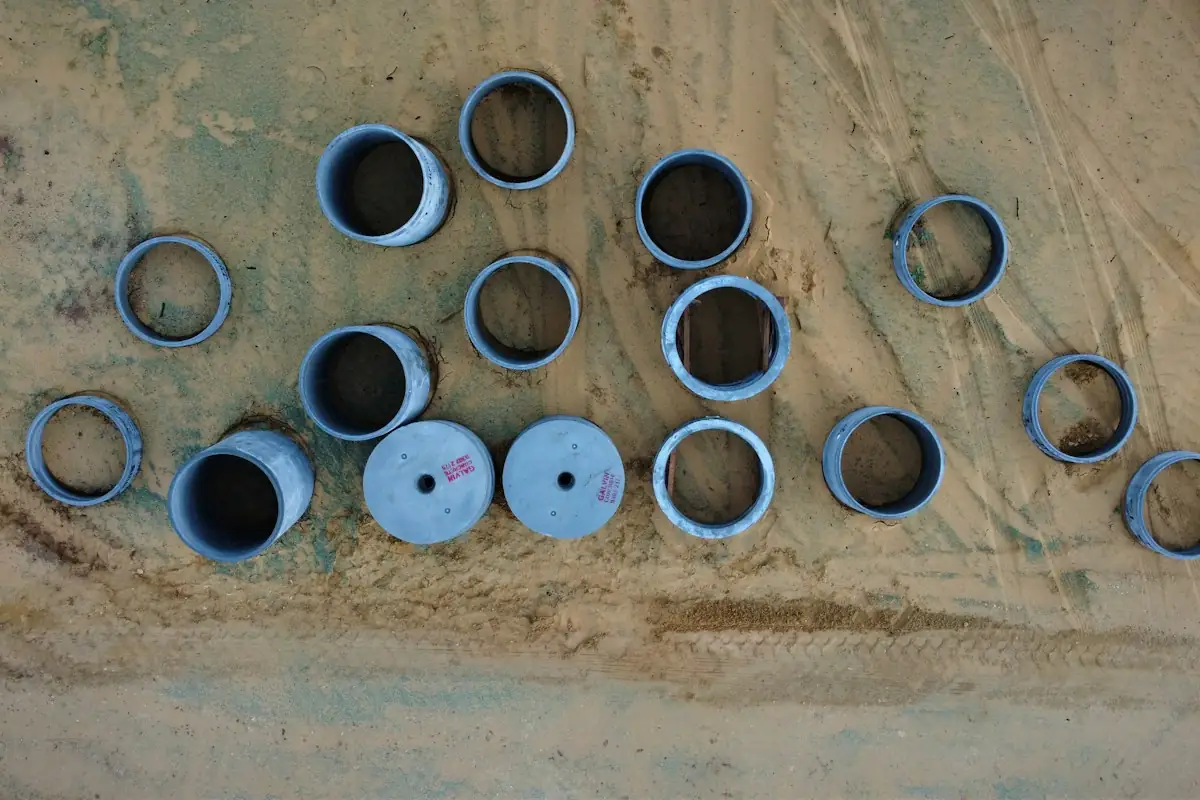
What sump pump installation involves
A sump system has three parts: the pit, which collects water from the weeping tile; the pump, which turns on when the water rises; and the discharge pipe, which carries water outside and away. Installing one in a home that never had it means breaking the basement floor at a low point, digging the pit, connecting it to the drainage around the footing where possible, and setting a lidded basin.
Replacing a pump in an existing pit is simpler: we remove the old pump, check the pit for silt, install the new pump with a check valve and union, and test the switch through several cycles.
Sump water should never be pumped into the sanitary sewer. Discharge goes outside, to ground that slopes away from the home and not onto a neighbour's yard.
Older houses versus newer builds
Many older Oshawa homes were built with weeping tile tied directly to the sanitary or storm sewer, with no sump at all. Some were later disconnected under municipal programs. Where a house has frequent basement seepage, adding a sump can be part of the cure, usually together with a backwater valve on the sewer.
Homes built in Durham over the past few decades typically already have a sump pit in the basement. The pumps in those homes are often the original builder-grade units and are reaching the end of their life.
Questions to ask on the phone
- Does the basement get water, and if so, where and when?
- Is there an existing pit, and is it dry or wet most of the year?
- Is the basement finished, and where are the best access routes?
- Does the discharge pipe freeze in winter?
Check whether the City of Oshawa or the Region of Durham offers a flood protection subsidy at the time you plan the work; programs and terms change.
Aftercare
Test the pump every spring and autumn by pouring water into the pit till it switches on. Keep the lid on and the area clear. Extend the discharge well away from the foundation. Our basement renovation plumbing note covers what to do before finishing. While we are in the basement, ask about water line replacement and washer hookups.