Signs you need hydro jetting
We do not reach for the jetter on every clog. It earns its place when a line keeps blocking because the walls of the pipe are coated. Commercial-style grease buildup in a busy family kitchen line, heavy scale in old cast iron, and fine root hair that regrows quickly after cabling are the classic cases.
- Drains that clog again within weeks of a cable cleaning
- Camera footage showing thick grease or scale along the pipe
- Sludge and sand in long, low-slope lines
- Preparing a line for a repair or lining crew
How we handle hydro jetting in an Oshawa house
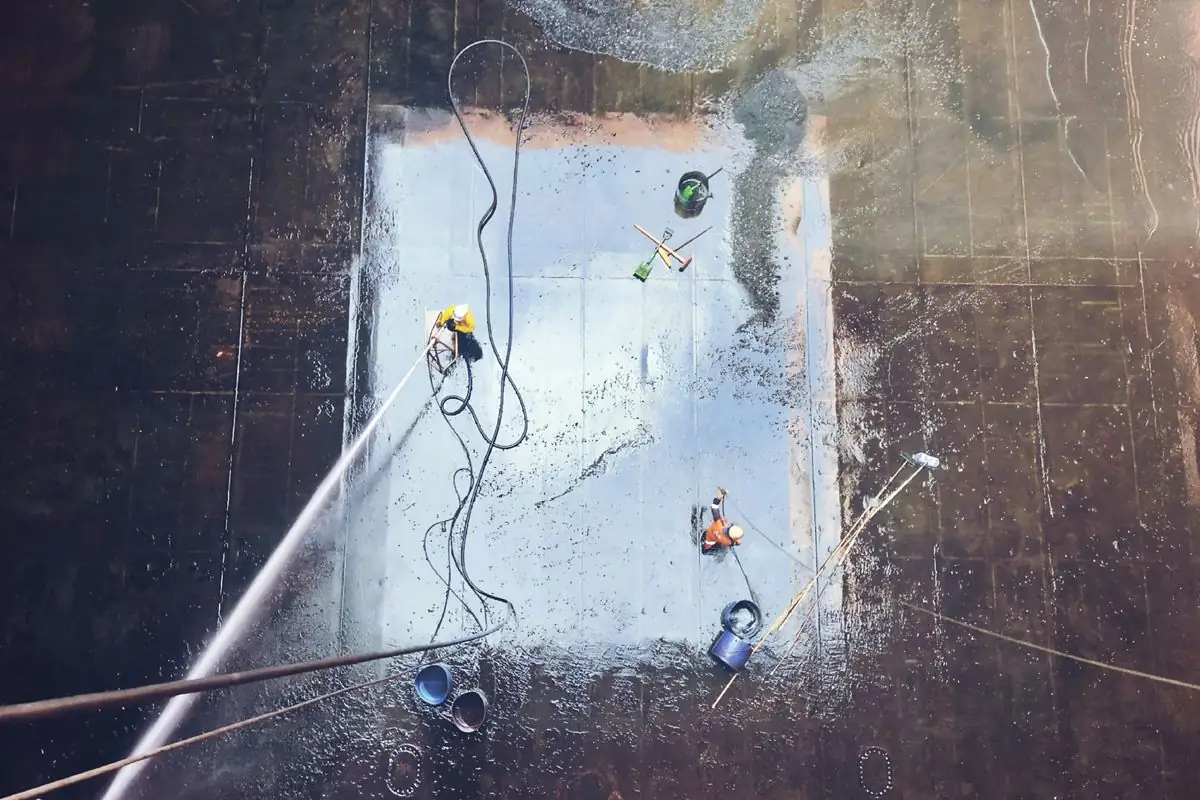
We always look before jetting. A camera pass confirms the pipe is strong enough for the pressure and that there is no collapse the water could make worse. We then feed a jetting hose with a nozzle that has rear-facing jets. Those jets drive the hose ahead and scour the walls as it goes. Coming back, the nozzle scrubs the pipe again and flushes the loosened material toward the city sewer.
Pressure and nozzle are chosen for the pipe. Old cast iron and clay get a gentler setting than a modern PVC main. A final camera pass shows the result.
Jetting is about restoring the full pipe diameter. A cable bores a path through a clog; water clears the whole circle.
What affects the scope
Getting at the pipe is the main factor. A proper cleanout at the foundation makes jetting quick and tidy, while going through a roof vent or a toilet takes more setup. The length of the run, the quantity of grease or scale and the pipe condition all play a part. In some cases we recommend jetting once to clean a line thoroughly, then a regular cable or jetting schedule to stay ahead of roots.
Jetting cannot fix a broken pipe. If the camera finds a crack or offset, repair comes first.
Before you call
Note how often the line has clogged and when it was last cleaned. Find the cleanout and make room around it. If you are buying a house, our plumbing checklist for home buyers covers questions to ask the sellers. A clean drain is also a good moment to update a basement sump with a battery backup sump pump, or to replace a tired bowl through toilet installation.